23 participants from 8 countries took part in the Advanced Training Course on Restoration of River Connectivity

From 14 to 17 July, near Kalofer, 23 specialists from 8 countries (Bulgaria, Ireland, the USA, Slovenia, Croatia, Italy, Australia, and Argentina) took part in the specialised Advanced Training Course on Restoration of River Connectivity, organised by the Science for Nature Foundation and the Blue Rivers Foundation.
On the first day, Prof. Jesse O’Hanley (University of Kent, UK) presented the topic of barrier inventory — the conceptual framework of river connectivity and the methods for identifying, categorising, and mapping barriers within a river system. Prof. Carlos Garcia de Leaniz (Swansea University, UK) was unable to attend in person, but the topics and materials he developed were presented and discussed with participants in detail.
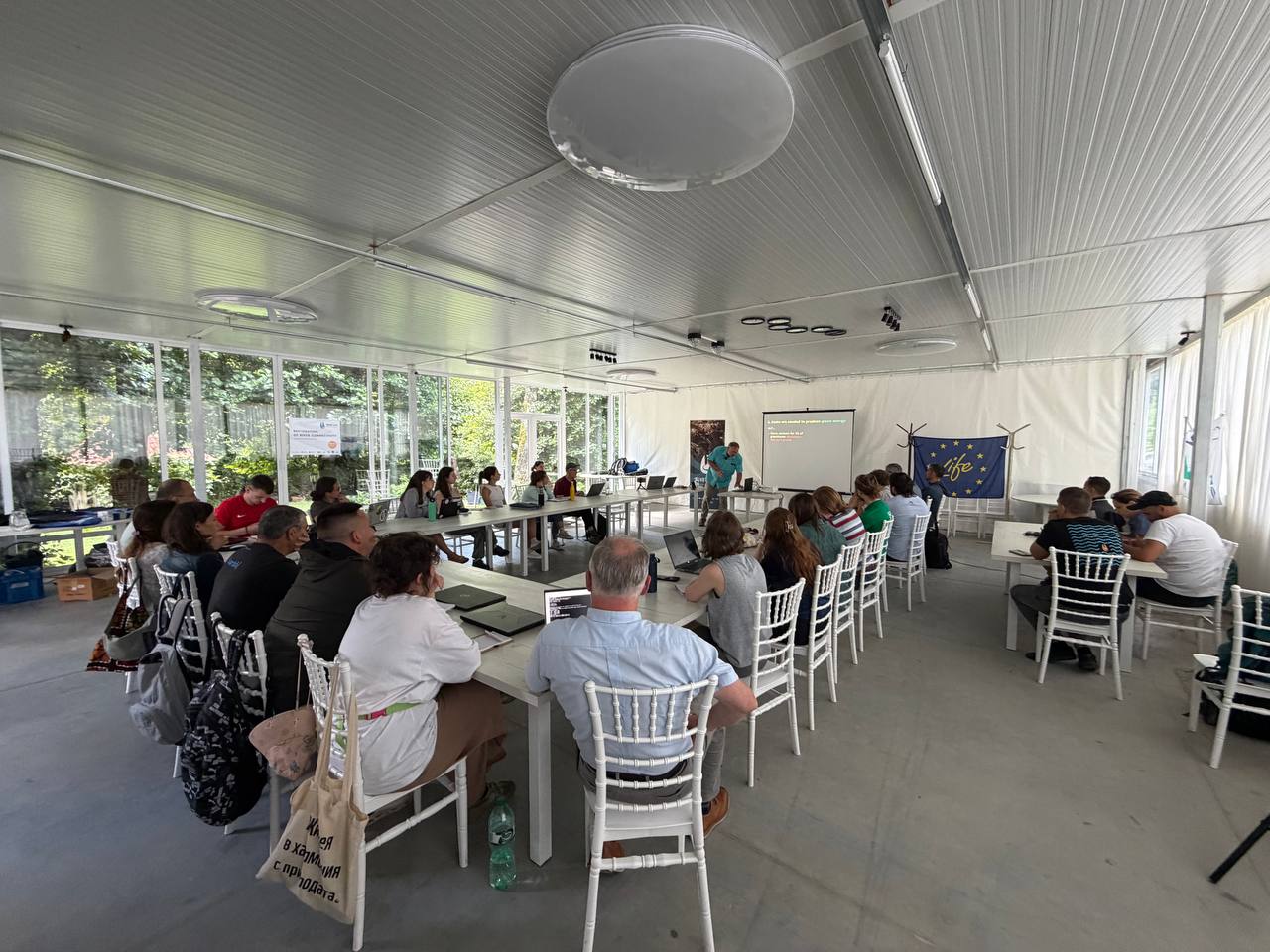
Science for Nature Foundation
During the course, Prof. Martin Pusch (Leibniz Institute of Freshwater Ecology and Inland Fisheries, Germany) and Prof. Piotr Parasiewicz (National Inland Fisheries Research Institute, Poland) presented the hydromorphological assessment — practical methods for data collection, historical models for tracking river change, and the place of hydromorphology within the Water Framework Directive (WFD).
Together with Gilles Segura (Institute of Environmental Sciences, France), Prof. Martin Pusch and Prof. Piotr Parasiewicz addressed the fragmentation impact assessment — the ecological consequences for biological and physical river processes, and the ecosystem services affected by barriers.
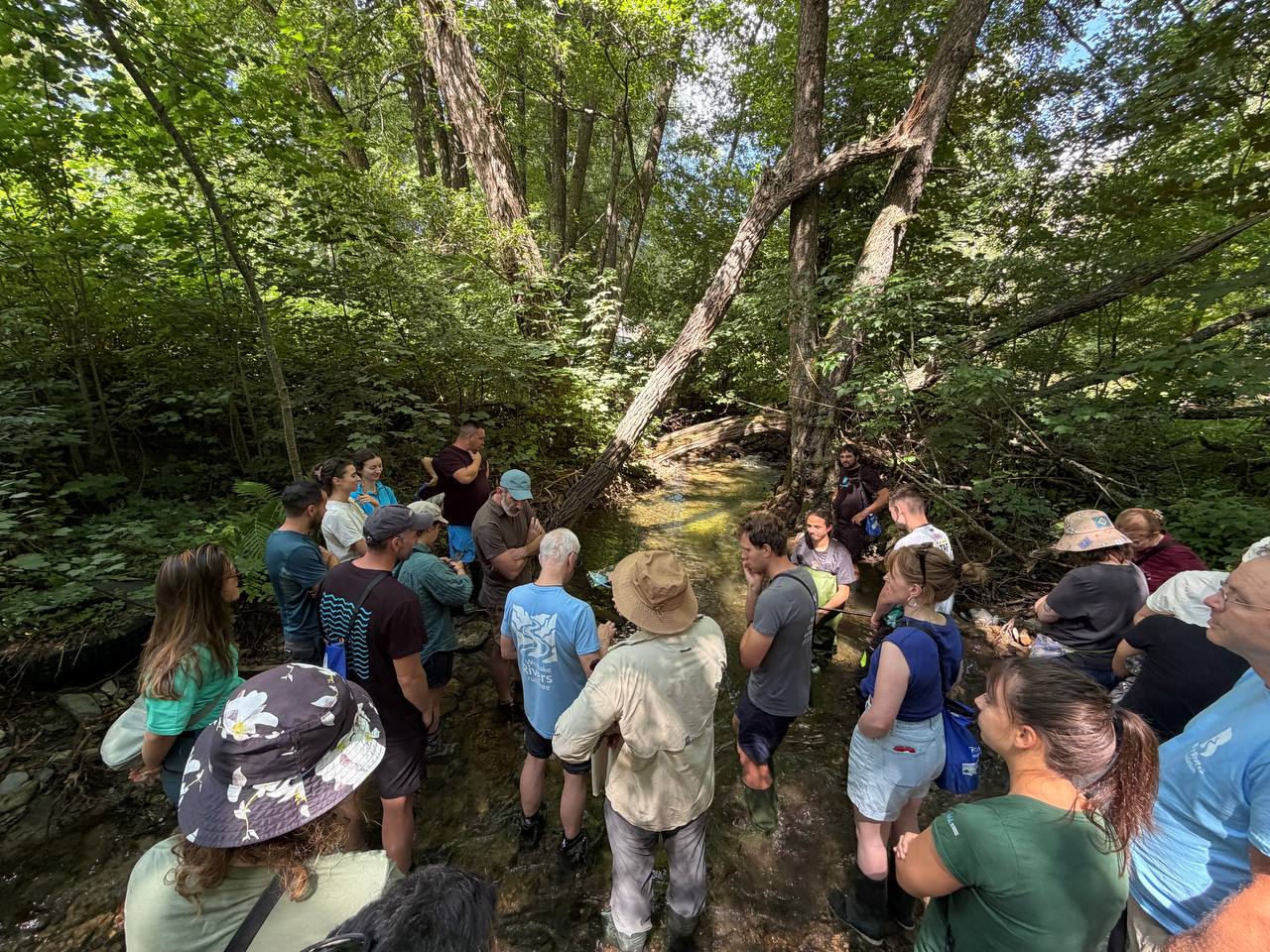
Science for Nature Foundation
On the final day, Prof. Jesse O’Hanley led a practical session on barrier removal, covering implementation and scaling up, in which participants built their own restoration scenarios, integrating what they had learned over the previous days.
The course has ended, but the work of restoring river connectivity continues. What was learned is already feeding directly into the activities of the RiverLIFE project.
The course is delivered under the RiverLIFE project 101213136 — LIFE24-NAT-BG-RiverLIFE, co-funded by the LIFE programme of the European Union and coordinated by Fortis Visio Ltd., with partners: Science for Nature Foundation, Blue Rivers Foundation, IBER-BAS, IFA – Plovdiv, and EEA.
Views and opinions expressed are, however, those of the author only and do not necessarily reflect those of the European Union or CINEA. Neither the European Union nor the granting authority (LIFE Programme) can be held responsible for them.